Concilium: coordination across agent work
An early coordination system for persistent repository agents, shared project plans and durable work state.
in progress
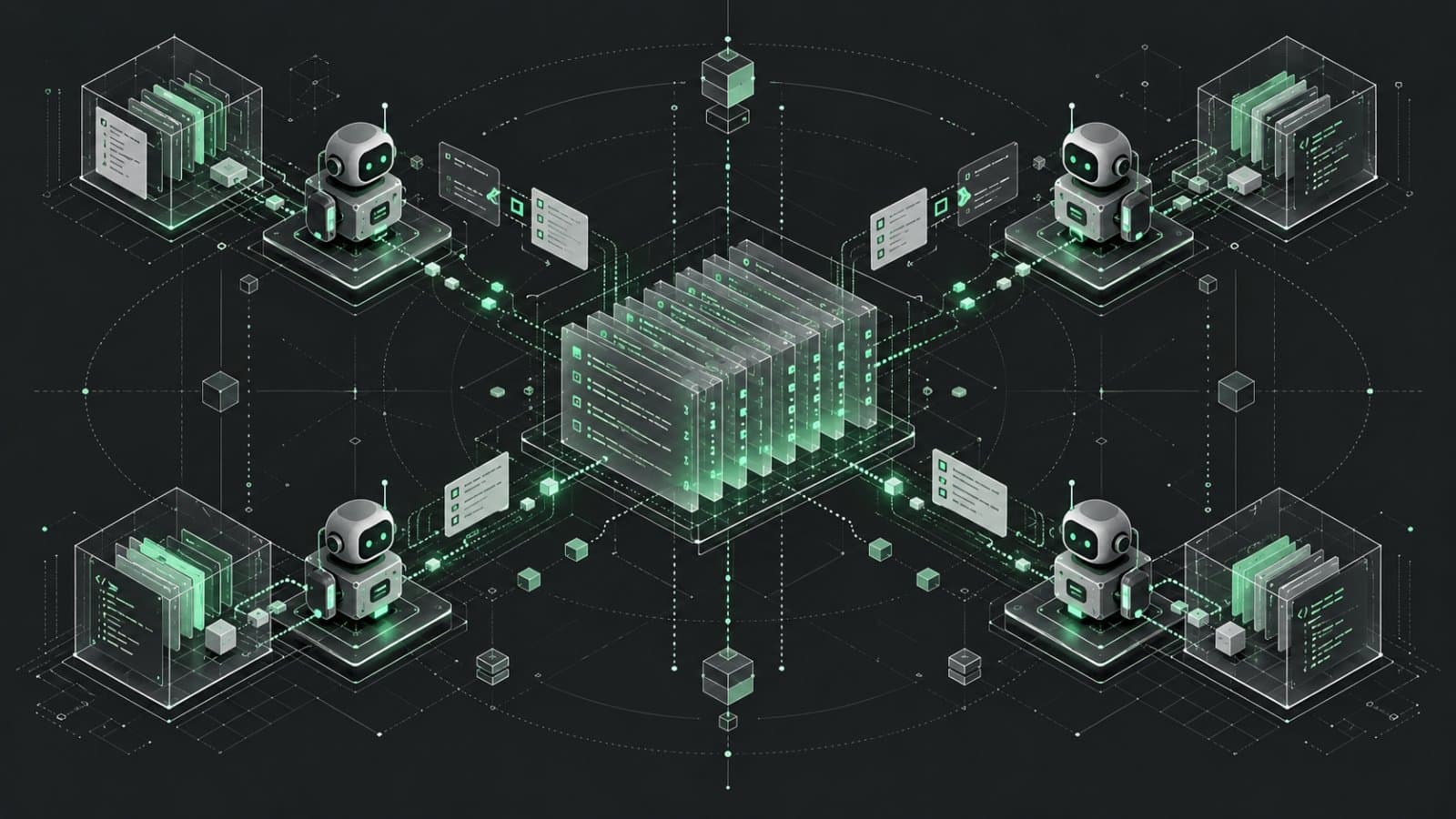
A software system often spans several repositories. Giving each repository an agent does not automatically give the system a coherent plan. Concilium explores the coordination layer that connects local work to a shared delivery goal.
CTO to Human: coordination is its own responsibility
The project’s central concept is a Master Project: several repositories belonging to one logical system. A Master Agent coordinates that system, while persistent Repo Agents work within individual codebases. Optional specialists handle concerns such as architecture, QA and release coordination.
The public repository describes early MVP development. The ambition is planning and delivery convergence; it should not be read as evidence that autonomous cross-repository delivery has already been solved.
Engineer to Engineer: persistent context and issue-backed work
The documented architecture separates core, orchestration, integrations, memory and server modules. It combines Java/QQQ services, PostgreSQL and a Next.js interface, with GitHub Issues supplying an external work-tracking boundary. Agent execution is another integration, rather than the entire application model.
The engineering question is how an assigned change acquires enough architectural context, reports evidence and converges with changes in other repositories. Persisting per-repository context can help, but a shared delivery state still needs explicit contracts for ownership, dependencies and completion. The project is investigating those contracts.
The Concilium repository and its design specification are the primary references. Future journal entries will distinguish the design from behavior verified in the running system.